
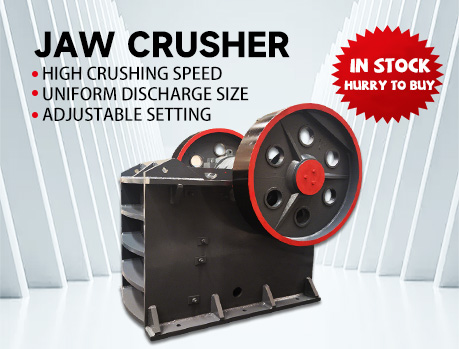
The Ultimate Guide to Jaw Crushers: How They Work, Types, and Maintenance Tips for 2026
Introduction
In the world of heavy machinery, the jaw crusher remains the undisputed workhorse of the mining and aggregate industries. Whether you are crushing hard granite, recycling concrete, or processing iron ore, the jaw crusher is often the first step in the size reduction process.
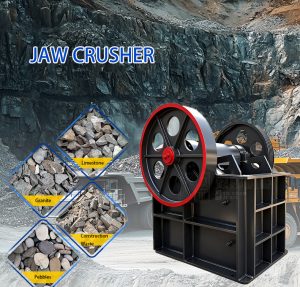
But how do you choose the right model? And how do you ensure it runs at peak efficiency without costly downtime? In this guide, we break down the mechanics, the different types, and the best maintenance practices for jaw crushers.
1. What is a Jaw Crusher? (The Basic Principle)
A jaw crusher is a compression-type machine. It reduces large rocks into smaller rocks, gravel, or rock dust.
The machine has two vertical jaws:
The Fixed Jaw: Stationary, mounted on the frame.
The Swing Jaw: Moves back and forth relative to the fixed jaw.
When the swing jaw moves forward, the material is crushed between the two plates. When it moves backward, the crushed material falls out through the bottom discharge opening.
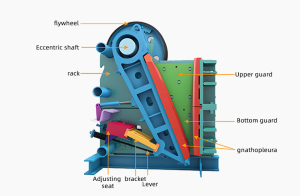
2. Key Components You Must Know
To optimize your crusher, you need to understand the parts that take the most abuse:
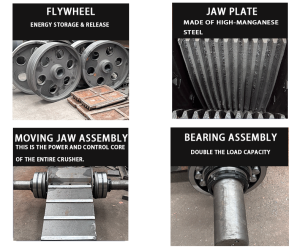
Jaw Plates (Dies): The wear parts. Made of manganese steel. Tip: Rotate them regularly to extend life.
Toggle Plate: A safety device. If a non-crushable object (like a steel bar) enters the chamber, the toggle plate breaks first, protecting the main frame.
Flywheels: Store kinetic energy to smooth out the crushing cycle.
Eccentric Shaft: The heart of the crusher. It converts rotational motion into the reciprocating motion of the jaw.
FAQ
Q: What is the difference between a jaw crusher and a cone crusher?
A: A jaw crusher is a primary crusher (first stage). It handles large rocks. A cone crusher is a secondary crusher (second stage). It makes smaller rocks into even finer gravel.
Q: Can a jaw crusher crush wet material?
A: It can handle slightly damp material, but very sticky or wet clay will clog the crushing chamber. A grizzly feeder is recommended to remove fines before crushing.
Q: How often should I replace the jaw plates?
A: It depends on the abrasiveness of the rock. For hard granite, you might get 3-4 months. For soft limestone, you might get 12-18 months.
Conclusion
The jaw crusher is a simple but powerful machine. By understanding its mechanics, choosing the right type for your material, and sticking to a strict maintenance schedule, you can maximize your crushing efficiency and minimize your operating costs.
Looking for a reliable jaw crusher for your next project?